
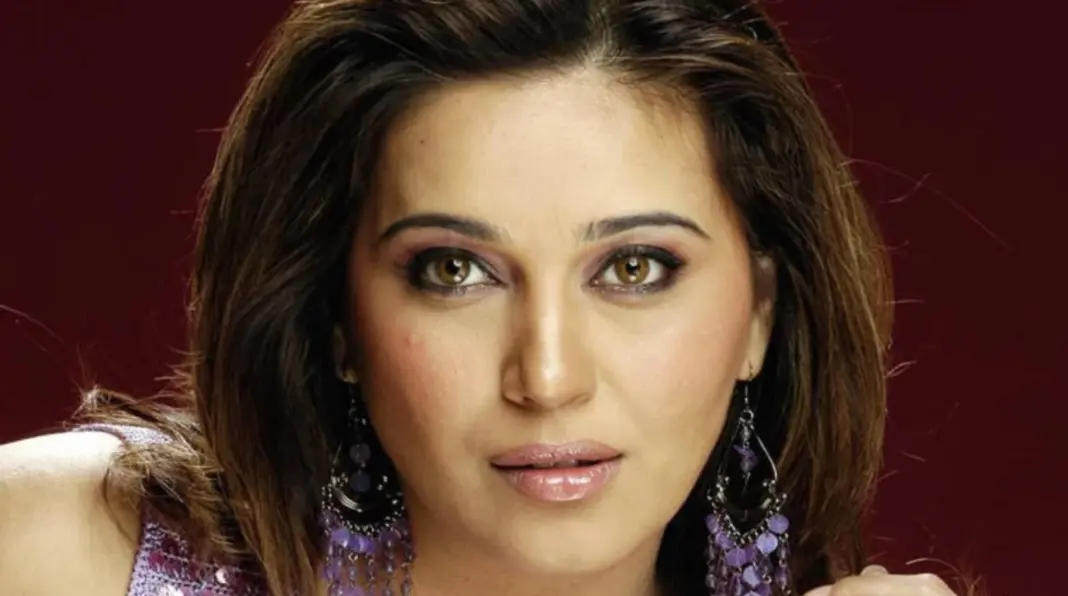

Veteran actor Niki Walia says she has never been particularly comfortable following the conventional rules of the entertainment industry. After more than three decades in showbiz, the actor continues to push against the image that casting directors have traditionally associated with her.
From making her film debut with Mr Azaad to moving into television and taking on unconventional roles, Walia says there have been several moments when she chose personal principles over professional opportunities.
In a conversation with Mid-Day, the actor reflected on her career, her latest film Bhai Tera Star Hai, her long-running comparison with Madhuri Dixit and her efforts to convince casting directors that she can play characters far removed from the polished, urban women she is often offered.
Niki Walia Finds a Different Side of Herself in Bhai Tera Star Hai
Walia recently appeared in Bhai Tera Star Hai, where she plays Mandy, the wife of Sanjay Kapoor’s character.
The actor describes Mandy as loud, unapologetic and fearless — qualities that gave her an opportunity to move away from the roles audiences may traditionally associate with her.
After spending close to 30 years in the industry, Walia considers the part an important opportunity to experiment with a different character. However, she also expressed disappointment over the film’s reception.
Calling the film’s response unfortunate, Walia said she felt particularly bad for director Vivek Agarwal and actor Raghav Juyal.
For an actor who has spent years trying to demonstrate her versatility, the project represented more than simply another credit. It was also an opportunity to show audiences and the industry a side of her that is not always visible in the roles she is offered.
‘I Was One of Those Anomalies, a Rebel’
Walia says her willingness to challenge conventions began early in her career.
She entered films with Mr Azaad, starring alongside Anil Kapoor, but eventually moved away from cinema and built another chapter of her career in television.
Looking back, the actor connects that decision partly to her refusal to tolerate situations that made her uncomfortable.
She describes herself as someone who was outspoken even when she was new to the industry and acknowledges that speaking openly could come at a professional cost.
“I was one of those anomalies, a rebel,” she said, while recalling how she chose not to compromise on matters that conflicted with her principles.
According to Walia, her decision to step away from the film industry was also influenced by the environment she experienced at the beginning of her career.
Choosing Dignity Over a Career Opportunity
Walia recalled an incident from the sets of Mr Azaad that she says made her particularly conscious of the importance of standing up for herself.
She was only around 20 at the time and still a newcomer. When she felt she was not being treated appropriately on the sets, she chose to speak about her discomfort rather than remain quiet.
“I chose my dignity over my career path,” Walia said.
She also remembered the expectations that could accompany a young actor’s professional life, particularly around maintaining relationships with distributors and other industry figures.
Walia said she was uncomfortable with the idea of attending dinners with distributors simply because it might help a producer sell the film in more territories.
For her, maintaining personal boundaries mattered more than following what she believed were unwritten expectations of the business.
Her Experience Working With Anil Kapoor
Walia also reflected on her equation with Anil Kapoor during Mr Azaad.
Because Kapoor was considerably more senior than her at the time, she says she remained conscious of maintaining professional distance.
Rather than developing a casual friendship or informal rapport with her co-star, Walia remembers being nervous around him.
“He was much more senior than I, and I didn’t have that kind of rapport,” she said, explaining that she generally kept her distance while working on the film.
Her recollection offers a glimpse into how different the experience could be for a newcomer working alongside an established star.
The Madhuri Dixit Comparison Has Followed Her for Years
One comparison that has remained a recurring part of Walia’s career is the one involving Madhuri Dixit.
According to Walia, people have pointed out a resemblance between the two actors for decades. It is not a comparison she encountered only during the early phase of her career; she says it continues to surface even today.
“There wasn’t a passing day of my life that I was not made aware, or someone told me, or I have read it somewhere,” she said.
For an actor with a career spanning several decades, the persistence of that comparison is notable. Yet Walia’s current focus appears to be less about resemblance and more about ensuring that she is not restricted by the image associated with her appearance.
Niki Walia Wants to Break the ‘Urban’ Casting Stereotype
Perhaps the biggest professional challenge Walia says she continues to face is convincing casting directors that she can play characters from completely different social and cultural backgrounds.
She believes her appearance has sometimes led the industry to place her in a narrow category — particularly sophisticated, wealthy or urban roles.
Walia insists that she should not be confined to that image.
“I have really struggled to make people understand that you cannot put me in a box,” she said, adding that she is willing to undergo physical changes if a role requires them.
She even cited Amitabh Bachchan’s transformation for Paa as an example of how dramatically an actor’s appearance can be altered to serve a character.
Her argument is straightforward: if an actor can undergo a major transformation for a role, there should be no reason why her polished or urban appearance should prevent her from playing a rural character.
A Career Built Around Reinvention
Walia’s career has moved across films and television, and her recent work suggests that she remains interested in exploring unfamiliar territory rather than simply repeating a familiar screen persona.
Her comments also underline a larger challenge faced by actors whose physical appearance becomes closely associated with a particular type of character.
For Walia, breaking that association requires more than saying she is versatile. She wants casting directors to give her the opportunity to demonstrate it through auditions and performances.
Her role in Bhai Tera Star Hai has given her another chance to do exactly that.
After more than three decades in entertainment, Walia’s message remains consistent: she does not want her career to be defined by an image created for her by others.
Instead, she wants the freedom to decide what kind of actor she can become next.