
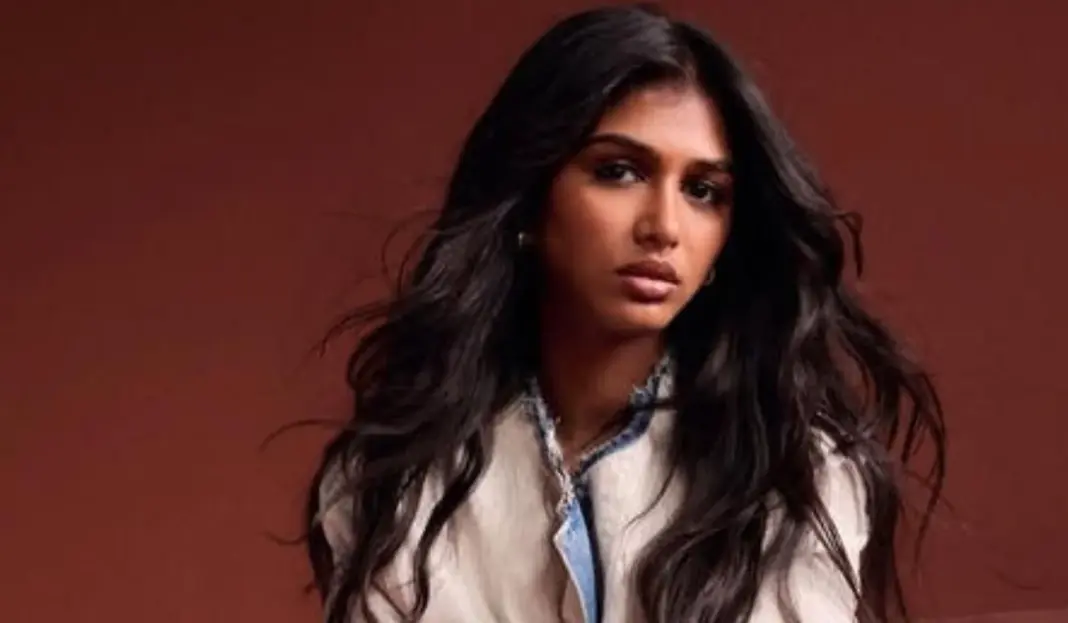

Priyanka Kedia is bringing a more nuanced idea of South Asian representation to Hollywood with Netflix’s Best of the Best, a coming-of-age comedy that puts friendship, ambition, dance and personal identity at the centre of its story.
For British actor Priyanka Kedia, representation on screen is no longer simply about seeing South Asian actors in prominent roles. The bigger question, she believes, is how those characters are portrayed once they are there.
The 24-year-old actor of Indian origin stars alongside Never Have I Ever actor Maitreyi Ramakrishnan in Netflix’s Best of the Best, a coming-of-age comedy set against the competitive world of collegiate Bollywood-fusion dance.
Written by comedian Hasan Minhaj and his longtime collaborator Prashanth Venkataramanujam, and directed by Lena Khan, the film draws from experiences of growing up within the South Asian diaspora in the United States.
For Kedia, one of the most meaningful aspects of the project is that the characters are not defined entirely by their ethnicity.
ALSO READ: Hanuman Ansh Director Vishal Chaturvedi Took No Fee as ₹1.5 Crore Film Earns ₹366 Crore
Priyanka Kedia: ‘Our identity is not the punchline’
Speaking about the importance of the film, Kedia said South Asian audiences have often seen characters whose cultural identity becomes the central joke.
“We all have this common experience of growing up seeing ourselves represented as the butt of the joke,” Kedia said.
She explained that Best of the Best takes a different approach by allowing its characters to exist beyond their cultural background.
“To have a film where our identity is not the joke, it’s not the punchline, but just who we are and the things that we go through have nothing to do with it, that’s important,” she added.
According to Kedia, the characters are allowed to experience the same contradictions and emotions as anyone else. Their heritage is part of who they are, but it does not dictate every aspect of their personalities or storylines.
“That’s not the central part of who we are as people. We’re allowed to be messy, we’re allowed to be great, we’re allowed to be silly, we’re allowed to be complex and that is really important,” she said.
ALSO READ: Raghav Juyal and Suma Kanakala’s Dance at The Paradise Event Goes Viral; Nani Calls Him ‘Rockstar’
Best of the Best finds humour beyond cultural stereotypes
The film’s comedy, Kedia believes, works because its humour does not depend exclusively on cultural references or jokes about being Indian.
“And the joy and the comedy it has is universal. It’s not just, ‘Oh, you’re Indian, haha’,” she said.
That distinction is particularly relevant to a story centred on young South Asian characters navigating college life, relationships, ambition and competition.
Rather than making cultural identity the sole source of conflict or humour, the film places its characters within a broader coming-of-age narrative.
Kedia is also known for projects including Everything to Me (2024) and Disclosure Day.
ALSO READ: Madhoo Shah’s ₹500 Offering at Lalbaugcha Raja Sparks Viral Video Debate
Dance becomes a key part of the story
Dance plays a central role in Best of the Best, functioning as more than just a visual element or competition setting.
The story explores culture, ambition, identity and rivalry through the world of collegiate Bollywood-fusion dance. For Kedia, preparing for the role meant taking the dance component seriously.
The actor trained in Bharatanatyam for the film, despite neither she nor Ramakrishnan having formal classical dance training.
“We went through a lot of intense training. I danced a little bit growing up but neither of us are classically trained, but we had an amazing choreography team,” Kedia explained.
The production also focused on technical details of the classical dance movements.
“We had someone who was watching our mudras, with a hawklike focus to make sure that everything felt accurately represented because that was really important to us,” she said.
Kedia described the preparation as a rewarding experience, particularly because the filmmakers wanted the cultural elements of the dance sequences to be handled carefully.
“It was a really beautiful experience,” she added.
Why Best of the Best matters to South Asian representation
For Kedia, the significance of Best of the Best lies not simply in the presence of South Asian performers but in the freedom given to those characters to be fully developed people.
The film’s approach reflects a broader conversation around representation in Hollywood: visibility can be meaningful, but representation also depends on whether characters are allowed to have individual personalities, flaws, ambitions and stories that extend beyond ethnicity.
With Kedia and Maitreyi Ramakrishnan leading a story rooted in dance and young-adult experiences, Best of the Best aims to place South Asian characters within a familiar coming-of-age framework while retaining the cultural specificity of its world.
For Kedia, that balance is essential. Representation, in her view, works best when cultural identity can be present without becoming a stereotype or the automatic source of the joke.
ALSO READ: Kajol Mourns Rani Mukerji’s Mother Krishna Mukerji: ‘One More Star Gone’